Showing posts with label Brazil. Show all posts

July 6, 2010

7/2-3: Quarter Finals Feast

As we move into the final round, we're changing things up a bit and preparing pan-country feast to celebrate each final. You can choose which game to prepare the entire feast for, or just munch on a single dish for each game. We plan on celebrating a Spanish win by cooking up the entire array of dishes on Saturday.
Our theme for the Quarter Finals Feast? Street Food!
The Netherlands v Brazil
All that cycling and harsh weather make for a hungry people, who snack all day and still find the stomach for a hearty dinner. Often overlooked on the culinary scene, the cosmopolitan city of Amsterdam offers a diverse array of street food from the Indonesian stalls to the ubiquitous pancake houses. The Dutch are passionate about their french fries and a heaping cone of frites can be purchased on nearly every street corner. Vleminckx is renowned for frying up the best selection, serving them with onions, frietsaus (essentially mayonnaise) or a peanut sauce called "oorlog," which is Dutch for war - see, I told you they were serious about their fries! Our version serves them alongside an exotic Brazilian hot sauce. 

Brazilian street vendors offer all the usual hot dogs and hamburgers alongside regional specialties such as Pão de queijo (similar to the Paraguayan Chipa), salgadinhos (savory pastries), Iced Mate and queijo coalho grilled cheese kababs in Rio, and acarajé (black eyed pea fritters) and cocada (coconut candies) in Bahia. Whatever you buy, if it is savory, it is sure to come with Molho de Malagueta hot sauce. Known as "grains of paradise," malagueta peppers were one of the original exotic spices that lead Portuguese explorers to discover Brazil. A close relative of the serrano, these peppers are dangerously spicy. If you can't find the peppers, you can order the sauce from Rio's of Austin
Molho de Malagueta
1/4 cup palm oil
1 C vinegar
1 small yellow onion, chopped
7 malagueta peppers
1 tsp. fresh ginger, grated
1 tsp. salt
Heat the oil over low heat in a small skillet. Add the onion and sautee until it's translucent, about 5 minutes. Add the peppers, stir and cook until they are very mushy, about 15 minutes. Add the ginger and cook for another minute. Add the salt and stir. 
Belgian Frites
3-4 C frying oil
2 lbs Idaho/Gold/baking potatoes, peeled and sliced into 1/4 in wide sticks
The streets of Amsterdam sell authentic Belgian-style frites, characterized by a crunchiness achieved only through skill and double frying. The first time they are fried, they are cooked until tender. The second time, often done hours later, they are transformed into golden and deliciously crisp frites.
Heat the oil to 325°F. Divide the potato sticks into batches of 1 C each. Fry 4-5 min. per batch until lightly colored but not browned. At this point the fries can rest for several hours at room temperature until you are ready to serve. Repeat the frying process and then salt to taste. 
Serve with Molho de Malagueta. If it is too spicy, try whisking some into mayonnaise for an authentic Dutch Frites experience. 


Uruguay v Ghana
Uruguay street food includes the usual South American options of hot dogs piled high with every imaginable topping for less than a $1,  endless varieties of empanadas and churros, along with regional favorites such as chivitos, milanesas and tortas fritas (fried biscuits). 
Street food in Ghana is available from travelling pedestrian vendors, stalls, and ubiquitous "chop bars". Traditional African dishes, such as fufu, kenkey, banku, fried yams, and bushmeat kebabs are popular across the country while regional varieties use local ingredients such as fresh seafood along the coastline and fried cheese in Northern. Kenkey are steamed balls of fermented corn dough that come wrapped in corn husks or banana leaves. The dough is allowed to ferment for several days to take on sour flavors. If that doesn't appeal to you, and I can see why it may not, we'll go ahead and just eat ours fresh sans-sour. Classic accompaniments for kenkey include seasoned fried fish ( kyenam) or a fresh hot pepper sauce. Our menu uses kenkey as a base for Uruguay's best loved dish, Chivito. 
Ghanian Chivitos
Prepare the kenkey:
3 C fine corn flour
1 T corn starch
2 1/2 C warm water
Corn husks
Knead the dough until smooth. Then prepare the "aflata," which is a part of the dough cooked with water and added to the uncooked dough. Mix 2 C water with 1 tsp salt and half the dough, then cook over medium heat 10 min, stirring constantly. Remove from heat and stir in the uncooked dough. Form the dough into balls and wrap each ball in corn husks. Steam for 1 hour.
Assemble the Chivitos:
Tope each kenkey with a slice of thin grilled steak or ham, pancetta, mozzarella and a fried egg. 


Argentina v Germany
Germany has a number of Turkish street foods beyond the pan-European shawarma. Döner is similar to shawarma and available everywhere, especially in Berlin. Bavarian Fleischkäse, similar to meatloaf, is generally served with sweet mustard in a roll. Germany, known for its various types of sausage, lines its streets with ample wursts and beer is sold at all sidewalk snack stands.
In Argentina, vendors sell Choripán, a barbequeued sausage wrapped in french bread, or morcipan, the blood sausage (morcilla) version. Street empanadas are usually fried and can be made with beef, fish, ham & cheese or neapolitan. Other local street food includes local versions of the hotdog called pancho, tostados and lomitos. Sweets found in Argentine streets include caramel apple (manzana acaramelada), sweet popcorn (pochoclo) and a local snack called Garrapiñada, made of peanuts, cocoa, vanilla and caramel.
German Choripán
The Argentine choripán consists of a sausage made out of beef and pork, hot off the grill, split down the middle (called mariposa), and served on a roll. 
First, prepare the Chimichurri using our recipe from the game against Nigeria way back in June. Then, chose your wurst. As in Bratwurst, Currywurst or other variety of German sausage. Slice a baguette down the middle, spread each side with Chimichurri and insert the grilled German sausage. 


Paraguay v Spain
Our culinary journey through Paraguay as they've advanced in the Tournament has showcased many of their most popular street foods of sopa, chipa and milanesa. We even took a look at maté during an early Argentina game. In Paraguay, the local infusion of yerba mate is called Tereré and it is served cold, often with herbs such as lemongrass or fruit juices. Workers have a "tereré break" instead of a coffee break. 
Street vendors are uncommon in Spain as snacks are provided by hole in the wall tavernas selling a variety of traditional tapas. In the bigger cities, fast food bocadillo (sandwich) and North African kebab joints can be spotted on many side streets. During ferias and other events, however, the vendors come out of the woodwork hawking everything from ice creams to legs of ham. By far the most predominant street food, the staple of Spanish late night eats, is the churro. While you may have experienced versions filled with dulce de leche or pastry cream throughout Latin America, the notorious fried pastries originated in Spain, where they are dipped in a thick, bitter hot chocolate, most often as club goers head home around sunrise.
In place of the traditional chocolate, we serve our churros with tereré de chocolate. The Republic of Tea sells a Double Dark Chocolate Maté that is fairly easy to find, or you can make your own by stirring dark cocoa powder into maté.

Churros
1 C water
2 T brown sugar
1/2 tsp salt
1/3 C butter
1 C AP Flour
2 eggs
1/2 tsp vanilla
1/4 C sugar
1 tsp cinnamon
Bring water, brown sugar, salt and butter to a boil. Remove from heat and stir in the flour. Add the eggs and vanilla.
Heat ~2 in. of oil in a frying pan or deep fryer to 375F.
Fill a pastry bag with the dough, using a star shaped decorator's tool. In Spain, churros are piped using a churrera, a cookie-press looking contraption with the start nozzle. You can buy one, use a cookie press or a simple pastry bag. The star shape is the key to provide the right look and crunchy texture.
Test your oil to make sure it is hot enough by piping a small amount of dough into it. If the dough bubbles up right away, the oil is hot. One at a time, squeeze a line of dough into the oil. Squeeze out as many as your fryer will hold and cook ~5 min. until golden, turning as needed. Drain excess grease and sprinkle with cinnamon sugar.


HEY! We've seen that cuisine before! Cook the foods of today's competing countries using other recipes: From The Netherlands we enjoyed a Stampot of Burning Love and a Dutch Uitsmijter sandwich. Brazil delighted our taste buds with FeijoadaCaipirinhas and passion fruit mousseUruguay found its way on the menu several times since opening day, twice fused with France in Dulce de Leche Crème Brulée and Duck Confi Ravioli. It was the clear winner over Ghana's Jollof rice, although a Ghanian spin on German Black Forest Cake took on one of this year's toughest teams with fury. Less exciting from Germany was their cucumber salad, Gurkensalat, spin on the English tea sandwich, but the Käsespätzle German take on mac 'n cheese will surely grace our kitchens again. Both are severely overshadowed by Argentina's contributions of ChimichurriMalbecDuck confit empanadas and especially, alfajores. If they can stand up equally well on the field we'll be impressed and surprised! Paraguay, with its hearty reflections of Argentina and indigenous cultures, never failed to please with dishes such as Sopa Paragauaychipa, and the fried deliciousness of the Milanesa. Unfortunately for them, their up against intense competition. Spain's cuisine of Manchego and ChorizoPeras al VinoPaellaAjo Blanco and Gambas al Ajillo clearly comes out on top, so much so that we devoted an entire post to discussing their cuisine

Prefer to eat out instead? Our Dining Guide tells you where and why.

June 28, 2010

6/28: Netherlands v Slovakia, Brazil v Chile


Feeling as though I've exhausted the existing selection of traditional Slovak dishes that appeal to me, I'm happy to bid fairwell to the team as we proceed into the next round. Chile, on the other hand, is a country I wish I'd spent more time on. I recommend the recipes at Canela Kitchen, which posts straight from the source in Santiago, Chile. Her recipes include a variety of empanadas and puddings, which come in endless creative flavors in Chile such as corn and prawn, and are listed in both English and Spanish. We're posting two Chilean recipes today to bid adieu and cannot encourage you enough to take this opportunity to enjoy an awesome Carmenere.
Slovaks are shocked when they arrive in the US to find people pouring syrup and whipped cream on their French Toast - they eat it salty! Dutch Uitsmijter is a hearty open-faced sandwich of ham, eggs and cheese, often served for breakfast. Uitsmijter' means 'bouncer' in Dutch, telling the story of a late night snack served just before getting kicked out of the bar. I can think of few foods more perfect for a World Cup match.
If they aren't already serving it on French Toast, they certainly will be now. 
I sincerely doubt we'll ever see the Dutch slathering a cilantro salsa upon their Uitsmijters, but for those of us in places like Texas where breakfast doesn't count if it's not served with salsa, a traditional Chilean Pebre ties this dish together perfectly. Similar but in many ways superior to pico de gallo, pebre is served on everything from grilled meat to sandwiches.  If you cannot find aji chiles, a jalepeno will do, but firey flavors are not characteristic of Chilean cuisine. 
Uitsmijter on Chlieb vo vajci (Dutch sandwich on Slovak French Toast)
Whisk 3 eggs (vajcia), salt liberally, and coat bread (chlieb) in the egg (typically, rye bread is used) then fry on a hot greased pan.
For the Uitsmijter:
Top the Chileb slices with ham and Gouda. Fry 2 eggs, sunny side up, then top the bread. Add Pebre to taste.

Chilean Pebre
1 onion chopped finely
1  green ají chopped
1 tablespoon of oil
1 tablespoon of cilantro chopped
1 tablespoon of lemon juice
Combine in a food processor - consistency should be chunky.
Chile v Brazil
An elegant red wine meringue traditionally served with crema inglesa, or clotted cream, this is the equivalent of a Chilean zabaglione. Brazilians are also fond of meringue and use it in almost every popular dessert from banana pie to the layered pavê desserts
They also prepare a red wine pudding called Sagu de vinho whose flavors may be reminiscent in this turron, although certainly not the textures. Taking inspiration from the Italian pairing of zabaglione and fruit, we pair the Turrón with the national dessert of Brazil- a simple yet heavenly passion fruit mouse. The combination of egg whites and condensed milk-based desserts calls on two cultural legacies that characterize modern Latin American cuisine - the legacy of the monks and the Nestlé market penetration that brought its canned milks to the South before fresh milk become widely distributed. Today, Brazilians still call Nestlé the "Leite Moça" or milkmaid.
Turrón de vino con Mousse de Maracujá
Prepare the Mousse:
1 C creme de leite (Brazilian evaporated milk) or cream
1 C sweetened-condensed milk
1/2 C frozen passion fruit or juice if you cannot find the pulp
(optional) one fresh passion fruit
Pureé in a blender until fluffy then chill for a few hours.

Prepare the Turrón:
1/2 C Chilean red merlot or cabernet
3/4 C sugar
3 egg whites
1 cinnamon stick
pinch of salt
In a pot heat the red wine with the cinnamon stick and sugar ~8 minutes until a heavy syrup. Remove cinnamon.
Beat egg whites with pinch of salt until soft peaks, then slowly drizzle in the wine syrup while beating the whites until meringue is cool.
To serve: Divide the chilled mousse into glasses and top with a dollop of turrón.


HEY! We've seen that cuisine before! Cook the foods of today's competing countries using our other recipes: Enjoy a Danish/Dutch Stampot of Burning Love along with Slovak goulash and bryndzové halušky. Slovakia's Bublanina is a clear winner, though we doubt they'll prove so successful in the game as opposed to the kitchen.


Brazil has dominated our menus when compared to Chile, as it will likely dominate the game. It would be difficult for anything to stand up to Feijoada and Caipirinhas


although the Chilean seafood included in our Paella provides ample competition.


Prefer to eat out instead? Our Dining Guide tells you where and why.

Elimination Round

On to the Round of 16! Stepping into the elimination stage, we take a look at the foods of those countries that have made the cut:


Uruguay found its way on the menu several times since opening day, twice fused with France in Dulce de Leche Crème Brulée and Duck Confi Ravioli. They'll face South Korea on Saturday, a country we've seen in spicy and distinctly Asian short ribs.


Later on Saturday, the US faces Ghana in an unexpected match. Ghana may compete on the pitch, but in the World Cup of Food, USA is a clear winner with Bacon Brownie Cupcakes and Texas Peach Pie over Ghana's Jollof rice. However, a Ghanian spin on German Black Forest Cake may be one of the 2010 WCFC's crowning achievements.

Later on in the weekend, England will face a formidable opponent in Germany in what is sure to be a violent match between the two rivals. While it may be World War on the pitch, Käsespätzle, or German mac 'n cheese, made a great addition to our English Ploughman's Lunch, albeit with an Algerian twist.
Earl Grey Ice Cream, however, would be an unlikely topping for our bananas Ghana take on German Black Forest Cake.

Argentina versus Mexico presents a great opportunity for exploring two complimentary, but unique and exciting cuisines. While Argentina will always hold a special place in our hearts for blessing us with Chimichurri and Malbec, we'd find it tough to live without tacos, margaritas and Arroz Mexicana. They both win when filled with Duck confit in the form of empanadas and tamales, and while, sure, its all fun and games when we're all beat France, but only one will walk off the pitch a winner after Sunday's game.

Come Monday, The Netherlands will play Slovakia to remind us just how tired we are of Gouda and dishes that end in "-sky." Nevertheless, we did enjoy both naming and eating the Danish/Dutch Stampot of Burning Love along with Slovak goulash and bryndzové halušky. The clear winner here is Slovakia's Bublanina, though we doubt they'll prove so successful in the game as opposed to the kitchen.

Brazil has dominated our menus when compared to Chile, as it will likely dominate during Monday's game. It would be difficult for anything to stand up to Feijoada and Caipirinhas
although the Chilean seafood included in our Paella provides ample competition.

Regardless of what happens during Japan v Paraguay, the game and cuisine are sure to take backstage to the Iberian feast we have planned for Spain v Portugal. You're likely to have noticed by now through my single inclusion of Japan in a dipping sauce that this is a cuisine that has never quite been able to interest me. Paraguay, on the other hand, with its hearty reflections of Argentina and indigenous cultures, I find enticing. Dishes such as Sopa Paragauay, with the slight deviation of adding my homegrown green chile, and the fried deliciousness of the Milanesa make this landlocked Latin American country the clear winner in this match. My bets are on them for the game as well.

Portugal, the land of my beloved porto; the country that gave birth to Feijoada and spiced up Mediterranean dishes with Piri Piri has much to be proud of, but will forever take backstage to its larger neighbor to the east. Spain, more beloved to me even than porto for its Rioja, brings Manchego and Chorizo as well as Peras al Vino to the table. While they may win on the basis of these dishes alone, traditional Paella clearly puts them on top, so much so that we devoted an entire post to discussing their cuisine.


June 25, 2010

6/25: Portugal v Brazil, Chile v Spain, Switzerland v Honduras

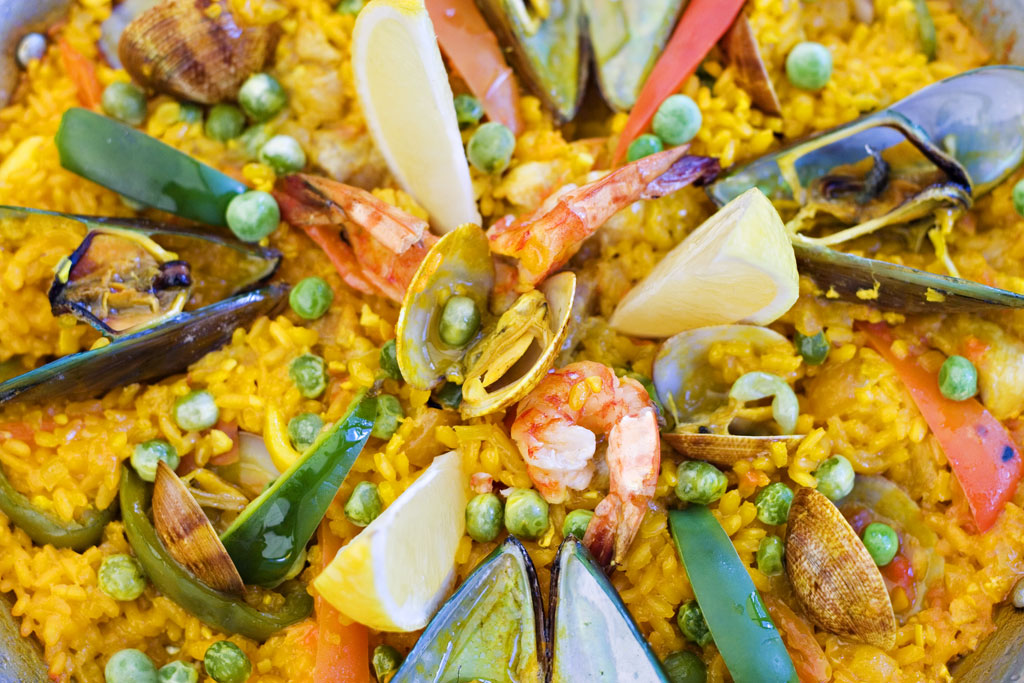
We finish out the second week of World Cup Food with an exciting series between our favorite teams in pick and in food as we prepare to head into the knock-out round. On the menu today we're venturing into Paella, the quintessential Spanish dish, done in the style of Chile and Portugal, with Brazilian drinks, a Honduran appetizer and Swiss dessert. 


What's that you say? N. Korea and Cote d'Ivorie also play today? We hadn't noticed.


Chile, with its extensive coastline, is known for its ample variety of seafood from squid, clams, lobsters and eels to the famous Sea Bass. Equally seafaring are the Portuguese who round out the top-five of global fish consumption (or so I read somewhere). Thus, these two countries from opposite ends of the globe unite in a single harmonious dish - the traditional Paella de Mariscos. We're spicing things up a bit with the influence of Portugal's former colonies, using piri piri peppers and ample garlic.
Paella is a slow, social cooking experience that if often enjoyed outside. We've included a traditional Honduran snack to enjoy while salivating over the aromas emanating from the paellera along with the classic Brazilian cocktail, the Caipirinha.


Traditional Brazilian Caipirinha
Prepared in the traditional style - no random fruity spritzes, no blending, no pitchers - just pure cachaça, lime and sugar in a glass. If you've ever wondered what separates an excellent Caipirinha from a mediocre one, chances are the trick was in the sugar. Authenic Caipirinhas are made with real sugarcane, sold in brick from under the name of rapadura (papelón in the Carribbean or panela in Mexico). If you can't find it, you can use turbinado sugar or order online.
Per single drink: 
2 tsp rapadura, shaved
1 lime, cut into wedges
2.5 oz cachaça
Muddle the sugar and limes with a pestle or wooden spoon. Fill the glass with ice, top with cachaça and stir. For an authentic Brazilian toast, look all toasters in the eye, say "saúde!" and drink immediately.
Photo: Flickr Marcio Monteiro

Honduran Baleadas
A simple preparation of black beans and assorted toppings spread across a flour tortilla, the official breakfast/snack/symbol of Honduras is a food you'll find yourself going back to time and time again. Vary toppings from carnitas to guacamole, or top it all off with a fried egg as we prefer to do (we add fried eggs to everything).
Prepare the Honduran Flour Tortillas:
4 C AP flour
2 tsp salt
2 tsp baking powder
4 T lard 
~1 1/4 C water
Whisk together flour, salt and baking powder. Cut in the lard, then add 1/4 C of water and begin to knead. Slowly add more water, kneading until the dough is smooth but no longer sticky. Let rest a few minutes then cut into ~10 balls. Roll out the tortillas and cook on a cast iron skillet set to high heat ~1-2 min. until brown spots form. The flat cast iron skillet specifically for tortillas is called a comal and is just the right size each tortilla should be.
Prepare the Frijoles Negros 
Hondurans often cook with red beans but beans of any color will work.
2 lbs dried black beans, rinsed
1 Spanish onion
6 garlic cloves, minced
1/2 to a whole jalapeño pepper (tastes vary)
Juice of one lime
1/2 C of red wine
4 slices of bacon, chopped
1 T cumin
1/2 bunch cilantro, chopped
Boil beans for 5 min., let rest for 1 hr, then drain. Fry the bacon, then add onion, garlic and jalapeño. Add to beans. Add remaining ingredients. Season with salt and pepper as you mash the beans gently in the pan. 
Assemble the Baleada:
Spread black beans across a warm tortilla and add your chosen topping. Traditionally, baleadas are topped with a creme fraiche-like "crema" that can be found at many Central American groceries. 


Paella de Marisco
As in every rice dish, the type and quality of the chose rice greatly effect the dish. Asian rice such as Basmati will not do for paella. In Spain arroz bomba is sold specifically for paella and will absorb the liquid without getting mushy, but as it is difficult to find in the States, I often substitute the Arborio rice used for risotto.
While it is preferable to prepare your own caldo, or stock, any quality broth will do.
If you don't want to run out and buy a paellera, a large cast iron skillet works great and is perfect for cooking outside on the grill. Avoid using a non-stick pan as you want the rice to form the flavorful crust called socarrat. Many Spaniards swear its the best part of the paella - you can express love by offering your share of the crust to your loved one.
1 lb mejillones (mussels), cleaned 
1/2 lb camarónes (prawns), traditionally with heads on
1/2 lb calamares (cuttlefish or squid) 
1/4 lb pulpo (octopus)
6 cloves garlic, chopped
1 medium onion, chopped
1 Piri Piri pepper, chopped
1 cup grated tomatoes
2 C rice
~4 C fish stock
Few strains of saffron, soaked in 2 T water
1 C dry white wine
Lemon pieces for serving
Bring the stock to a boil then turn down to a simmer.
Prepare the sofritto: Fry the garlic, pepper, onions and chile. Add the tomato and stir. Add the rice and let it stick to the bottom of the pan for a few seconds as it hisses or "sings." Add the wine and absorb. Add the stock, saffron and let simmer 10 min. You may need to add more water or scrap occasionally, but let the rice form some crust at the bottom of the pan. Add the seafood, tucking into the rice and cook ~15 min. until the rice is cooked al dente. Photo: Flickr benjieordonez


HEY! We've seen that cuisine before! Cook the foods of today's competing countries using other recipes: try Portuguese/Brazilian Feijoada with a Korean spin on Cote d'Ivoire's traditional plantains or Korean-spiced Portuguese hens and Honduran Tres Leches Cake with Spanish poached pears. If you didn't get a chance to try our Spanish Fondue with a Chilean Carmenere and Honduran dessert, you must go back to what has been one of our favorite meals of the tournament. As we get deeper into the tournament, it's time to bring out the leftovers, mix & match, and let the fusion menus run wild like a frenzied North Korean defense.

Prefer to eat out instead? Our Dining Guide tells you where and why.


Spicy World Pure Spanish Saffron 2 grams - Fresh!


Spanish Saffron Acrylic Box (3 pack)


Paella Seasoning Sachets with Saffron


June 21, 2010

6/20: Slovakia v Paraguay, New Zealand v Italy, Brazil v Cote d'Ivoire

Chances are, you spent the morning in the kitchen filling cupcakes to look like Little Debbie snack cakes because they are your dad's favorite treat and then went fishing in the afternoon. No? Regardless, HAPPY FATHER'S DAY and a legit excuse to miss a day of World Cup Food Challenge cooking unless your father is from one of today's competing countries. Luckily, where I'm from in New Mexico, we make a dish very similar to today's Paraguayan recipe (with the addition of locally grown green chile) and tend to grill a la Brazil on special occasions like Father's Day. If that is not for you, we hope you can incorporate a few of today's select recipes or restaurants into your celebration.

Slovakia v Paraguay
One of only two landlocked countries in S. America, Paraguay is called the "Corazón de América." Bordered by Argentina, Brazil and Bolivia, Paraguay's cuisine reflects this deep cultural fusion and is unusual in South American for its lack of seafood. Milanesas and empanadas from Argentina are popular, as well as guarana sodas from Brazil. Dishes such as sopa paraguay and chipa set Paraguayan cuisine apart. As Paraguayans tend to skip breakfast, snack vendors line the streets selling versions of chipa for "merienda." Usually crescent shaped but nothing like a croissant, chipa is made from cornmeal, yucca and cheese or it can be served filled with shredded beef in the form of chipa so'o.
We plan to make chipa later on in the games but have included a recipe for Sopa Paraguay, the country's most well-known dish, for today. The Sopa is typically served with soups or stews and we felt it would make a hearty pairing with Slovak Goulash.
Sopa Paraguay
1 large onion, chopped
1 C queso fresco
1 C mild cheddar, grated
2 C cornmeal
2 C corn kernels
1 tsp salt
1 C milk
6 eggs, separated
Oven: 400F. 
Sauté the onions in oil until golden. Whisk together the cheeses, cornmeal, corn, salt, milk and yolks. Add the onions.
Whip the whites until soft peaks and fold them into the batter.
Pour the batter into a greased 10x13 in pan and bake ~40 min. until set.

Slovak Goulash
1 lb of beef or pork, diced
4 potatoes, diced
1 onion, diced
1 T Hungarian paprika
2 carrots, diced
In a large pot, sauté the onions until golden. Add the paprika and simmer a minute until fragrant. Add the meat and brown. Season with salt and pepper. Add the carrots, cover with water and simmer 15 min. Add the potatoes, salt and pepper to taste, cover with water and simmer ~35 min. until potatoes are soft.

Italy v New Zealand
Dessert represents Italy today with a simple yet decadent traditional Zabaglione, a custard that must be mastered as a basic of Italian cooking. We're tossing in New Zealand into the dessert with a kiwi sauce, as Zabaglione is typically accompanied by a coulis or fresh fruits.
If you were an undying fan of our Pavlova and would like to stick with New Zealand for dessert, try the recipe for traditional Anzac biscuits our friend posted over at EmuisEmo.
Kiwi Zabaglione

1 C cream, whipped to stiff peaks and chilled
1/4 C sugar
1/4 C vin santo or marsala
1 T aged balsamic
3 kiwis, peeled and sliced
1 T fresh lime juice
1 T honey
Sprig of fresh mint
Whisk the yolks with sugar, wine and balsamic over a saucepan of simmering water. Whisk vigorously until thick and foamy. Remove from heat and whisk until completely cool (an ice bath helps if your arms tire). Gently fold the whipped cream into the custard and chill ~20 min.
While the Zabaglione chills, prepare the sauce by covering the kiwis with juice, honey and mint. To serve, place the kiwis at the bottom of a martini glass and spoon the Zabaglione over them. Photo: www.chefspencil.com

Prefer to eat out instead? Our Dining Guide tells you where and why.

June 15, 2010

6/15: New Zealand v Slovakia, Cote d'Ivorie v Portugal, N. Korea v Brazil

Dilemmas, dilemmas. After searching endlessly for a Pavlova in a Houston restaurant to represent New Zealand in our World Cup Dining Guide, I realized that most people don't actually know what a Pavlova is! This gorgeous meringue and whipped cream fruit tower named after the famed Russian ballerina has somehow fallen off our culinary radar. I've been looking forward to making it ever since.
Unfortunately, New Zealand is playing on the same day as Portugal, my favorite country for baked goods. What to do? Create a menu of just desserts? 
Even better, Portugal and Brazil playing on the same day provides a unique opportunity to address two national cuisines in a single dish!
It's also quite handy that modern Portuguese cuisine is heavily influenced by the cultures of its former African colonies and vice versa, so the Ivory Coast and Portugal compliment each other well. Feijoada, a stew of beans and pork is a typical Portuguese dish, although far more well-renowned is the Brazilian version where the Fava beans are replaced with black ones. Here we combine the traditional Feijoadas of Portugal and Brazil with the quintessential Ivoirian snack of fried plantains.
Comprised of over 60 unique ethnic groups, the Ivory Coast has varying regional cuisines, but is united by common cash crops that are remnants French rule. A the leading producer of cocoa and third largest producer of coffee, you may wonder why I did not choose an Ivoirian dish based on these staples. I never buy cacao or coffee from West Africa, which has not only destroyed much of the region's rainforest but employs one of the largest child and slave labor forces in the world. So here's my plug: buy fair trade cacao and coffee! Although it would have been ironic if we'd paired Ivoirian slave cacao with North Korean flavors. But no irony can justify the horrendous flavor profile of such a dish!
Instead, the pungent sweetness of the plantains should compliment North Korean kimchi, as it is known to be of a softer, less garlicky flavor than its southern counterpart. North Korean cuisine is known for its cleaner, milder tastes. Kimchi, the most well-known of all Korean foods, is a pickled vegatable dish served as a banchan (side dish) in countless variations in nearly every Korean meal. It will serve us well here since we can spice up the same kimchi later and call it South Korean. Never fear, the only thing totalitarian about this dish is that it's totally tasty :) 

Feijoada with kimchi-plantain banchan

Feijoada
1/2 lb dried fava or great northern beans, soaked overnight and drained
1/2 lb black beans, soaked overnight and drained
1/2 lb bacon
1/2 lb carne seca (spicy dried beef)
1 large onion, chopped
4 cloves garlic, minced
Bay leaf
3/4 lb chourico/linguica, cut into 1/4-inch slices
1 dried red chili
Chicken stock/broth
In a large pot, cook bacon until it starts to crisp. Add chourico and cook until lightly browned. Add onions and cook until golden, then add bay leaf, garlic and chili. Add remaining ingredients, adding the broth gradually to desired texture. Salt and pepper to taste. Remove the bay leaf and chili.
Photo: 1.bp.blogspot.com

Banchan: Pyongyang style kimchi; fried plantains
As kimchi must pickle over the course of a few days, we're picking ours up at the local Korean grocery. However, I've posted a recipe so as to explain what is involved in making kimchi at home
1/4 C coarse sea salt
1 head Napa cabbage, cut into small wedges
3 cloves garlic
1 in piece of ginger root
2 T Asian Fish Sauce
1 Asian radish, peeled and grated
1 small bunch green onions cut into 1-in pieces
1 T Korean chili powder
Dissolve the salt in a 1/2 gal container. Mince the garlic and ginger or combine in food processor with the fish sauce (once again, I call on my immersion blender). Combine the radish, onions and garlic mixture in a bowl with the chili powder. After squeezing and patting as much water as possible out of the cabbage, stuff the leaves with the radish mixture and stuff into the brine. Let sit for 2 to 3 days.

To prepare the fried plantains, simply slice two ripe (blackened) plantains and fry ~3 min until golden. Ivoirian plantains are typically fried in palm oil since olive oil is too expensive, which you are welcome to try, but I would not recommend it for health or flavor reasons. Toss the plantains with kimchi and serve in the closest thing you can find to a cute little banchan dish.

New Zealand vs. Slovakia
The Pavlova is said to have originated in the 1920's during one of the dancer's visits to New Zealand. More than just a meringue, the Pavlova is low baked, leaving a soft inner texture and traditional decoration with exotic fruits such as passionfruit and kiwi. In honor of its origins, we've decided to go with kiwis.
In order to create a Slovak element to our Pavlova, we've served it atop a traditional Slovakian pastry colorfully named "Bubbly cake." Slovakia seems to have taken the spicier, tastier end of the Czech republic split in the culinary department and offers some tantalizing dishes. I hope to revisit the Country later on in the tournament. Their desserts are typically built around some sort of pancake or coffee cake and topped with a fruit sauce such as blueberries. The name, "Bublanina" dervies from its bubbling batter during baking. Yes, Bublanina's batter bubbles during baking - say it three times fast! We've adapted the recipe to include less sugar so as to better compliment the Pavlova topping and left the blueberry sauce for final serving atop the meringue. Also, TX blueberries are in season.
Dances with Bublanina
Prepare the Bublanina:
1/2 cup (1 stick) butter, softened
1/2 cup sugar
3 large eggs divided, at room temperature
1 tablespoon Grand Marnier or other orange liqueur (optional)
1 teaspoon orange zest
1/2 teaspoon salt
Pinch of cream of tartar
1 cup all-purpose flour
2 cups fresh blueberries, washed and stemmed
Place rack in center of oven and heat to 350 degrees. Butter or lightly coat with cooking spray a 9-inch-by-9-inch baking pan. In a medium bowl, cream together butter, sugar and yolks until light and fluffy. Add liqueur, if using, orange zest and salt, mixing well. In a clean medium bowl, beat egg whites with cream of tartar until stiff. Alternately fold in egg whites and flour into butter-egg mixture. Turn batter into prepared pan and scatter blueberries evenly over top. Press down into batter with a spatula. Bake 30 to 40 minutes or until toothpick inserted near center comes out clean. Cut into 6 equal pieces.

Prepare the Pavlova:
4 egg whites at room temperature
1 C of Castor sugar
1 tsp white vinegar
1/2 T cornstarch
1/2 tsp vanilla 
1/2 C cream
Fresh kiwis, sliced
1 T fresh lemon juice
Preheat the oven to 275F. Line a baking tray with foil and draw a 7 inch circle on the foil (don't tear the foil). Set aside.
In a clean, medium-sized metal bowl, beat the egg whites with a clean electric mixer on medium speed. Beat until the whites form soft peaks. Gently sprinkle the sugar into the egg whites, until your egg whites form glossy stiff peaks.
Sprinkle the cornstarch and vinegar on the meringue and fold in gently with a plastic spatula. Add the vanilla and gently fold the mixture again.
Now gently spread the meringue in the circle on the foil to make a circular base. Make sure the edges of the meringue are slightly higher then the center so you have a very slight well in the middle.
Bake the meringue ~1:15 or until it goes a very pale, pinkish color.
Turn the oven off and leave the door slightly ajar to let the meringue cool completely. As the meringue cools, it will crack slightly.

Blueberry Sauce
1 pints fresh blueberries, washed and stemmed
1 tsp fresh lemon juice
2 T sugar
Reduce berries in a saucepan until sauce is desired consistency.

To assemble the Dances with Bublanina:
Arrange the Bublanina on a cake plate and top with the meringue.
Whip the cream with the vanilla extract until it forms peaks and gently spread the cream to the top of the meringue with a spatula. Arrange kiwis on top and drizzle blueberry sauce to serve.

Prefer to eat out instead? Our Houston Dining Guide tells you where and why.